

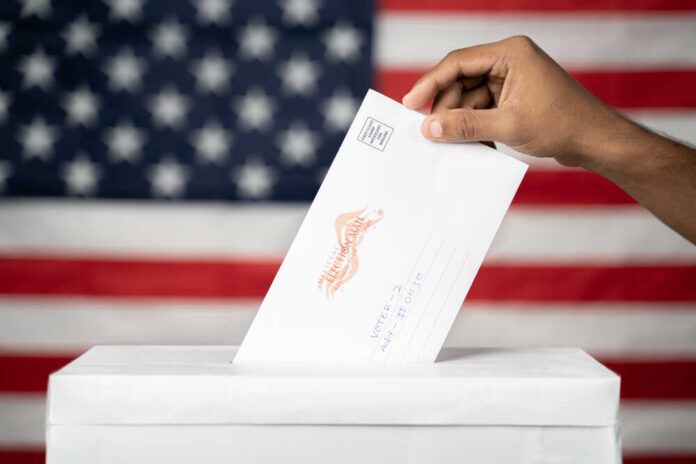
About 300 Utah primary ballots landed in a church dumpster, and the indictment explains how and when it happened.
At a Glance
- A federal grand jury charged a former Utah letter carrier over about 300 dumped ballots.
- Prosecutors say the ballots were discarded early in the June 2026 primary cycle.
- The defendant pleaded not guilty and denied a political motive, officials said.
- Mail ballot fraud is rare, but single incidents shape public trust debates.
What Prosecutors Say Happened, And Where
Federal prosecutors say a former United States Postal Service letter carrier, Damon Matai Seei, discarded mail that included about 300 mail-in ballots for Eagle Mountain voters.
The United States Attorney’s Office in Utah announced an indictment for unlawful secretion, destruction, and delay of mail. The filing says the ballots were part of election mail for the state’s June primary. Officials traced the tossed mail to a dumpster in a church parking lot in Utah County.
Acting Deputy Attorney General Trent McCotter described a tight timeline. He said Seei separated ballots from other mail not long after his shift began and discarded them within roughly ninety minutes. Officials said the dumped items also included non-election mail.
The core count focuses on the federal crime of interfering with entrusted mail. The Department of Justice framed the act as a clear breach of a basic promise to voters: ballots must reach mailboxes.
🚨Acting Deputy Attorney General @PADAGMcCotter announces the unsealing of an indictment charging a former USPS Postal Worker for allegedly disposing of HUNDREDS of Mail-In Ballots in Utah ⬇️ pic.twitter.com/QPv0E6o3GC
— U.S. Department of Justice (@TheJusticeDept) September 22, 2026
What The Defense And Officials Say About Motive
Seei pleaded not guilty. According to officials, he told investigators he did not intend to toss ballots and had no political motive. He reportedly said he was trying to get rid of advertisements to lighten his workload.
United States Attorney Melissa Holyoak said authorities heard there was no political agenda tied to his actions. A not guilty plea preserves his rights, and an indictment is not a conviction. The court process will sort intent and consequence.
Officials also stressed process. Ballots are marked and bundled, and routes are tracked. That makes diversion traceable. Federal enforcement often relies on chain-of-custody evidence to show where mail went off course.
Here, prosecutors say the evidence supports a targeted act against a defined set of pieces. Defense claims of mistake must square with how election mail is packaged and labeled. Jurors will weigh those details if this case goes to trial.
How One Route Became A National Proxy Fight
Election mail relies on simple trust built by tight controls. One person violating that trust sparks outsized reactions. Advocates for tighter rules will point to this case as proof that one actor can block hundreds of votes before they even reach a kitchen table.
Others will call it an outlier that enforcement caught. Both sides recognize a truth: isolated cases move public opinion more than spreadsheets do.
Research across years shows documented mail ballot fraud is very rare. Reviews of state records and case databases found vanishingly small rates compared with the tens of millions of mail votes cast. Low baseline risk does not erase the need for guardrails.
It argues for direct fixes where systems break. Strong tracking, rapid audits, and swift prosecutions protect honest voters and honest workers alike.
The Practical Fixes That Prevent A Repeat
Voters want common-sense steps that do not bury them in rules. Post offices can reinforce mandatory separation and scan checks for election mail at the start and end of each shift.
Supervisors can spot-check vehicle tubs and satchels before carriers roll out and when they return. Election officials can expand ballot-tracking alerts to ping voters when their ballot enters the system and when it arrives, closing the loop fast if something fails.
Mail voting depends on a simple promise: the ballot sent to a voter will actually reach the voter.
Federal prosecutors say former Utah postal worker Damon Matai Seei threw away mail assigned for delivery on June 3, including about 300 ballots for Eagle Mountain residents before… pic.twitter.com/fMPD58nZJF
— Dan Holbrook (@DanHolbrook) September 23, 2026
Local prosecutors and federal agents can also speed joint response when a route anomaly pops. Rapid retrieval, like pulling video and dumpster records the same day, locks down facts before rumors spread.
That helps citizens see a working system: detect, verify, correct, and charge. The view here is straightforward. Rules must be clear, enforcement must be swift, and consequences must be real. That balance guards both ballot access and ballot integrity.
Sources:
spectrumlocalnews.com, justice.gov, nbcnews.com, local10.com, about.usps.com